
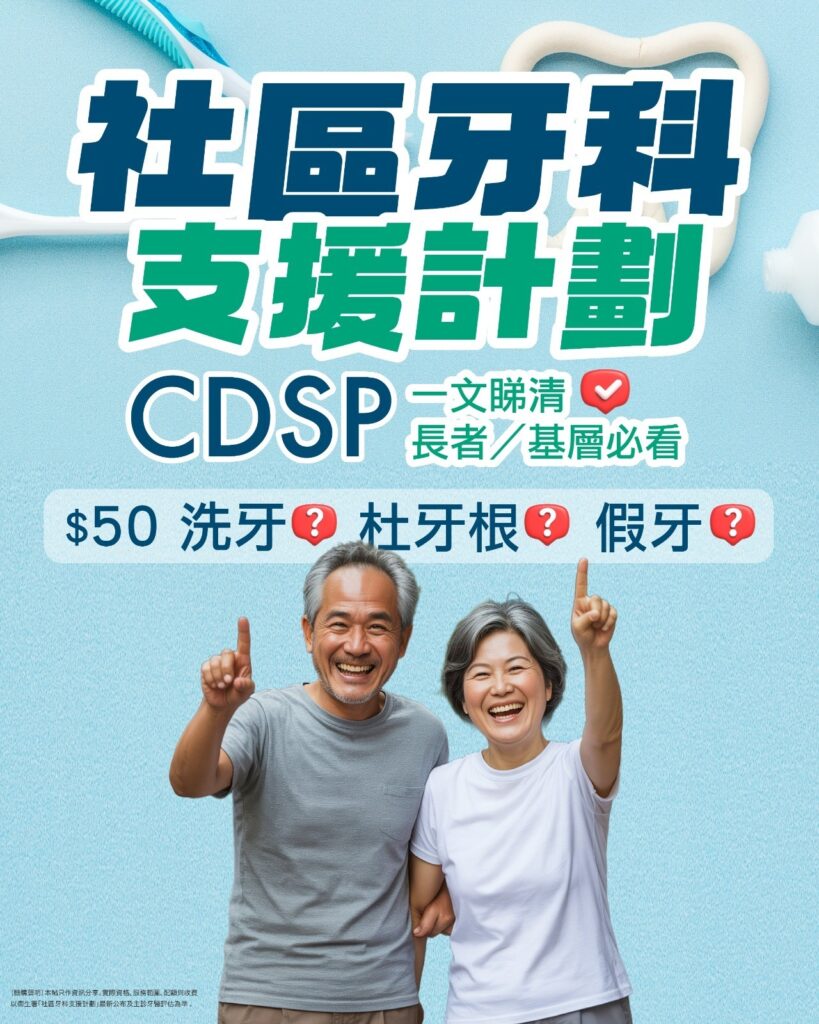
🦷【Community Dental Support Program (CDSP)】💡
‼️$50 Teeth Cleaning? Root Canal? Dentures? A Comprehensive Guide (Essential Reading for Seniors and Underprivileged Individuals)‼️
You may have heard of "government-subsidized teeth cleaning," which is true, but you need to be eligible, go to a designated NGO dental clinic, and have your teeth cleaned by a dentist before they can arrange the service. It's not something everyone can get right away. 🧐
🔎What kind of funding will you receive?
CDSP is a collaboration between the Department of Health and NGOs to support "economically disadvantaged groups" in receiving subsidized dental services, with a focus on early detection and treatment to help preserve teeth and improve oral health.
The plan includes: oral examination, X-ray, filling/extraction, teeth cleaning, root canal treatment (root canal), removal of dental bridges/crowns, removable dentures, etc. (all subject to evaluation by a dentist).
🦷Most frequently asked question: What are the fees for teeth cleaning?
Teeth cleaning is a subsidized service offered once every 365 days (as per the plan). Regarding fees: Category B teeth cleaning administrative fee is $50; Category A teeth cleaning administrative fee is fully subsidized by the government (i.e., no administrative fee is required).
Fee overview (Remember: these are administrative fees/total costs)
The following are the commonly used service fees listed by the Department of Health (collected by NGO dental clinics):
• Filling or extraction: $50 per tooth (each quota is calculated per tooth)
• Teeth cleaning: Category B $50; Category A administrative fees are fully subsidized by the government.
• Root canal treatment: $50 per tooth (Category B
• Removal of crowns: $50 per crown; Removal of bridges: $100 per bridge
• Removable dentures: $1,000 per set for upper/lower jaw; $500 per set for Category A (subject to conditions).
👉In addition, seniors can use medical vouchers to pay for related expenses (such as administrative fees/co-payments).
🔎Am I eligible?❓
✏️Applicants for the Community Dental Support Program must meet all of the following conditions:
1️⃣ Hold a valid Hong Kong identity card or a Certificate of Exemption from Registration; and
2️⃣ The current beneficiaries/recipients of the following items:
👉 Social Welfare Department (SWD) "Old Age Living Allowance"; or
👉Social Services Department's "Elderly Community Care Service Voucher Scheme" (Tier 2 Co-payment Level); or
👉Social Services Department's "Integrated Home Care Services (Frail Cases)" / "Improved Home and Community Care Services" / "Home Support Services" (Level 1 or 2 Fee/Co-payment Level); or
👉Hospital Authority's "Medical Fee Reduction and Exemption"; and
3️⃣ We have also registered to join "eHealth".
👉🏻How to Booking?
1. First, choose a dental clinic affiliated with an NGO that is participating in the program. You can contact the clinic directly to make an appointment, or contact a registered social worker for assistance in arranging it.
2. On the day of your follow-up appointment, bring all required documents to the clinic for eligibility verification. The attending dentist will then assess your eligibility and arrange appropriate subsidy services.
3. A reminder: You can generally only use your quota at one selected NGO clinic within the same cycle. It is recommended to have the same dentist follow up for a smoother process.
💡Can we help you?
If you would like us to help you with "initial triage," please inbox us the following information, and we will tell you which channel/NGO clinic to consult next (we do not provide online diagnosis):
• Age + Location (e.g., Sham Shui Po / Kowloon City)
• Main dental problems: pain/rotten teeth/want to get teeth cleaned/want to get dentures
• Are you receiving Comprehensive Social Security Assistance (CSSA), Senior Citizens' Living Allowance, Disability Allowance, etc. (if convenient)
⚠️ (Organizational Statement) This post is for informational purposes only. Actual eligibility, service scope, quotas, and fees are subject to the latest announcements from the Department of Health's "Community Dental Support Scheme" and the assessment of the attending dentist.





 EN
EN  ZH
ZH